Polonnaruwa succeeded Anuradhapura as the capital of Sri Lanka in the 11th century and offers a more compact and well-preserved collection of ruins. This UNESCO World Heritage Site is a garden city full of palaces, temples, and stupas. The crowning jewel is the Gal Vihara, a rock temple featuring four magnificent Buddha statues carved into a single granite face, considered masterpieces of Sri Lankan art. The city was built alongside the massive Parakrama Samudra (Sea of Parakrama), a man-made reservoir that is a feat of ancient irrigation engineering. Visitors can explore the Royal Palace, the Quadrangle (Dalada Maluwa), and the circular Vatadage relic house. Polonnaruwa is often explored by bicycle, allowing visitors to ride through green parklands between the ruins. The site is also famous for its large population of toque macaque monkeys, featured in the documentary 'Temple Troop'. A visit to Polonnaruwa offers a vivid window into the medieval golden age of Sri Lankan civilization.
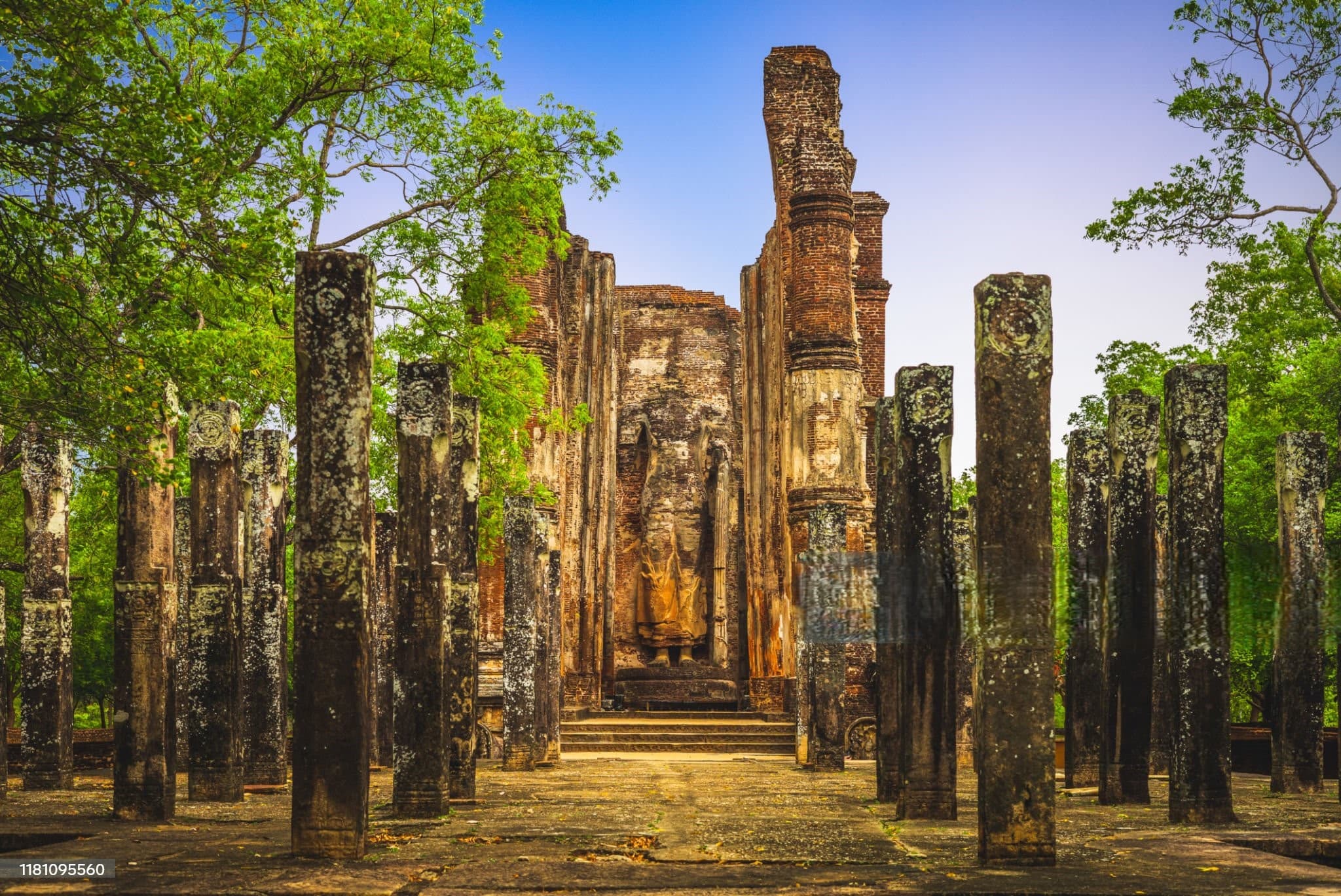
Polonnaruwa World Heritage Site
Sri Lanka
The second ancient capital, known for its well-preserved ruins, Gal Vihara rock statues, and reservoir.
Location on Map
Gallery
